
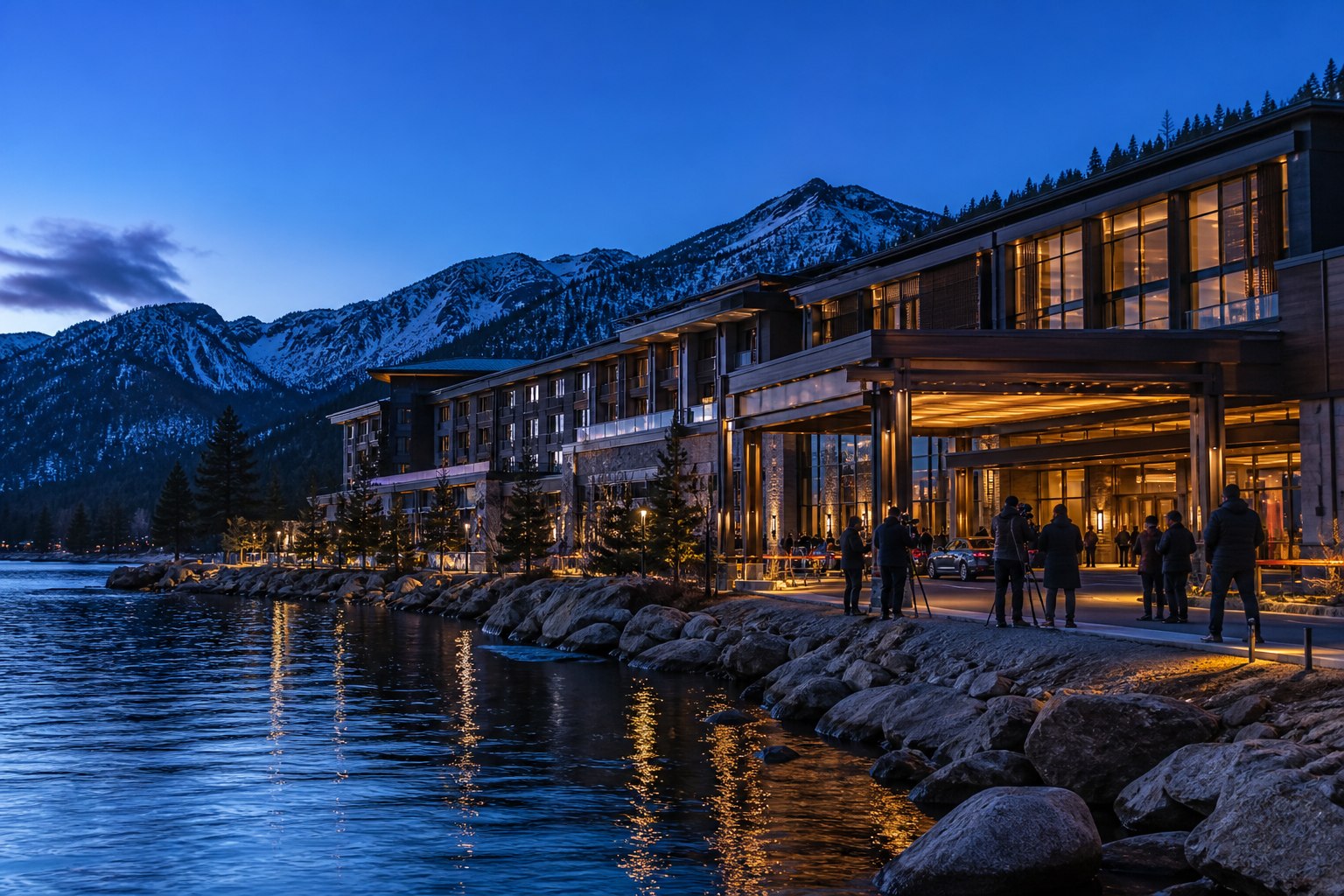
Caesars Entertainment formally opened Caesars Republic Lake Tahoe on 6 July 2026, closing the principal chapter of a multi-phase conversion of the former Harveys Lake Tahoe on the Nevada side of the state line.
What changed
Caesars describes the project as a property-wide transformation rather than a single casino refurbishment. The announced program includes redesigned guest rooms, a reworked lobby, a modernized gaming floor, renewed high-limit and poker areas, an updated sportsbook, meeting space, a pool and lounge, and a collection of restaurant, bar and live-entertainment concepts.
The resort remains physically connected to Harrah’s Lake Tahoe. Caesars says the two properties together provide nearly 1,250 rooms, approximately 88,000 square feet of gaming space, more than 1,400 slot machines and 100 live table games. Those are company-supplied operating figures; the release does not disclose a final project cost or provide independently audited post-opening performance.
A destination strategy, not only a floor reset
The operating logic is broader than adding new machines. Lake Tahoe competes as a year-round mountain destination, so rooms, restaurants, concerts, meetings and lake or ski access all influence the customer journey. A property can use non-gaming amenities to extend stays and distribute spending across more departments, while the casino remains one component of the resort economy.
The venue mix illustrates that strategy. Caesars highlighted the High Dive Pool and Lounge, Tessie’s Cocktails & Chords, WOLF by Vanderpump, HELL’S KITCHEN and a set of coffee, cocktail and nightlife concepts. The company also tied the resort to the Lake Tahoe Amphitheatre summer concert program. Brand partnerships can accelerate awareness, but they also increase the importance of consistent operations after the opening campaign ends.
The most consequential change is the repositioning of an established casino address as a contemporary alpine resort with multiple reasons to visit.
Why conversion projects matter
Conversions allow operators to reuse valuable real estate, infrastructure, licences and customer recognition. They can also be harder than greenfield projects: construction must be phased around existing operations, legacy systems need integration, and the final property must feel coherent even when individual elements opened at different times.
For the supply chain, a resort-wide conversion creates demand across casino cabinets, tables, systems, surveillance, hotel technology, food-service equipment and venue production. The opening date is therefore not the end of the project story. The next evidence will come from occupancy, event calendars, gaming volumes, staffing stability and the operator’s future disclosures.
What to watch
- Whether the new hospitality program changes seasonality outside the strongest summer and ski periods.
- How the connected Caesars Republic and Harrah’s properties divide room, gaming and entertainment demand.
- Whether renovated gaming areas receive further content and hardware refreshes after the formal opening.
- Any future disclosure of project capital, property revenue or return targets.